

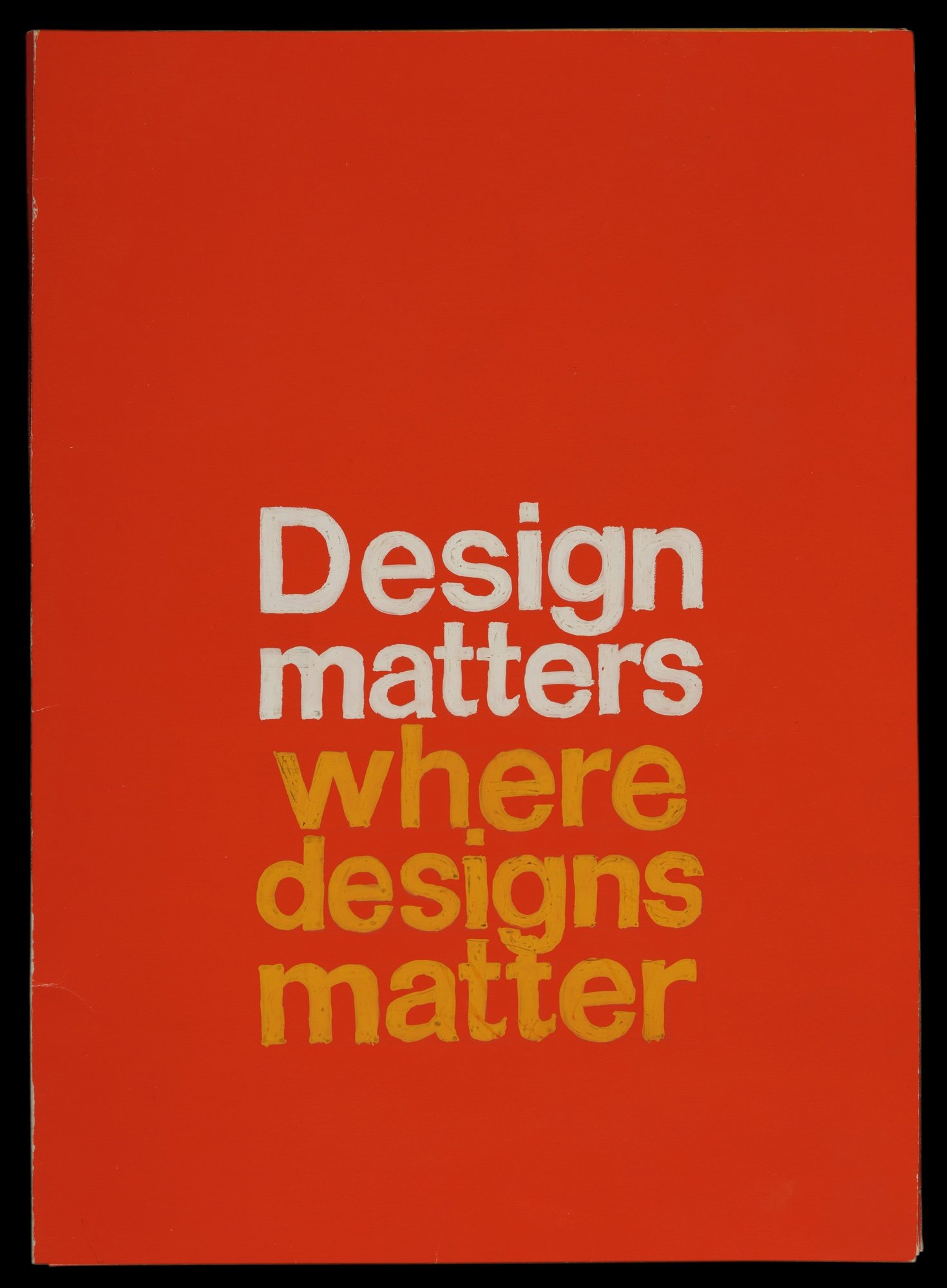
Original hand-painted illustration adapted to the cover for Design Matters, published in 1976. Image courtesy of National Museums Scotland.
Mary Schoeser discusses why Bernat Klein’s book Design Matters is as relevant today as it was when it was published in 1976.
How is it possible that a 50 year-old book could resonate with students, designers and historians after so much time has elapsed?
Well, it’s because Klein is a brilliant writer – clear, clever and committed to his views. Just a few examples must suffice.
Klein’s canny play with words begins with his title, Design Matters. It is repeated on the cover so that the dual meaning of the word ‘matters’ is given full focus.
Denoting the substance or subject of design, a glance at the table of contents reveals how thoroughly the author has considered just what ‘to design’ means.
There are 15 chapters, ranging from historical observations and comparisons between Britain and Europe, through the impact of freedom to choose and what that means, to four chapters on education and two on the Design Council. (There are also 38 pages of appendices focused on these last two topics.)
“To design means to care about people and individuals. Or, perhaps, it means simply to care.”
Without exception, throughout one hears Klein’s own voice, his personal passion for these questions and appetite for finding answers to sometimes-contentious points.
For social and design historians his critique of education and the Design Council are invaluable; he rails against - even then - about the limited number of hours devoted to the arts and crafts in schools and the fact that they ‘are not looked on as a positive, constructive subject but as a “holding” one...a general all-purpose palliative.’
The Design Council comes under intense scrutiny, offering an insider’s voice given his receipt in 1968 of a Council Award.
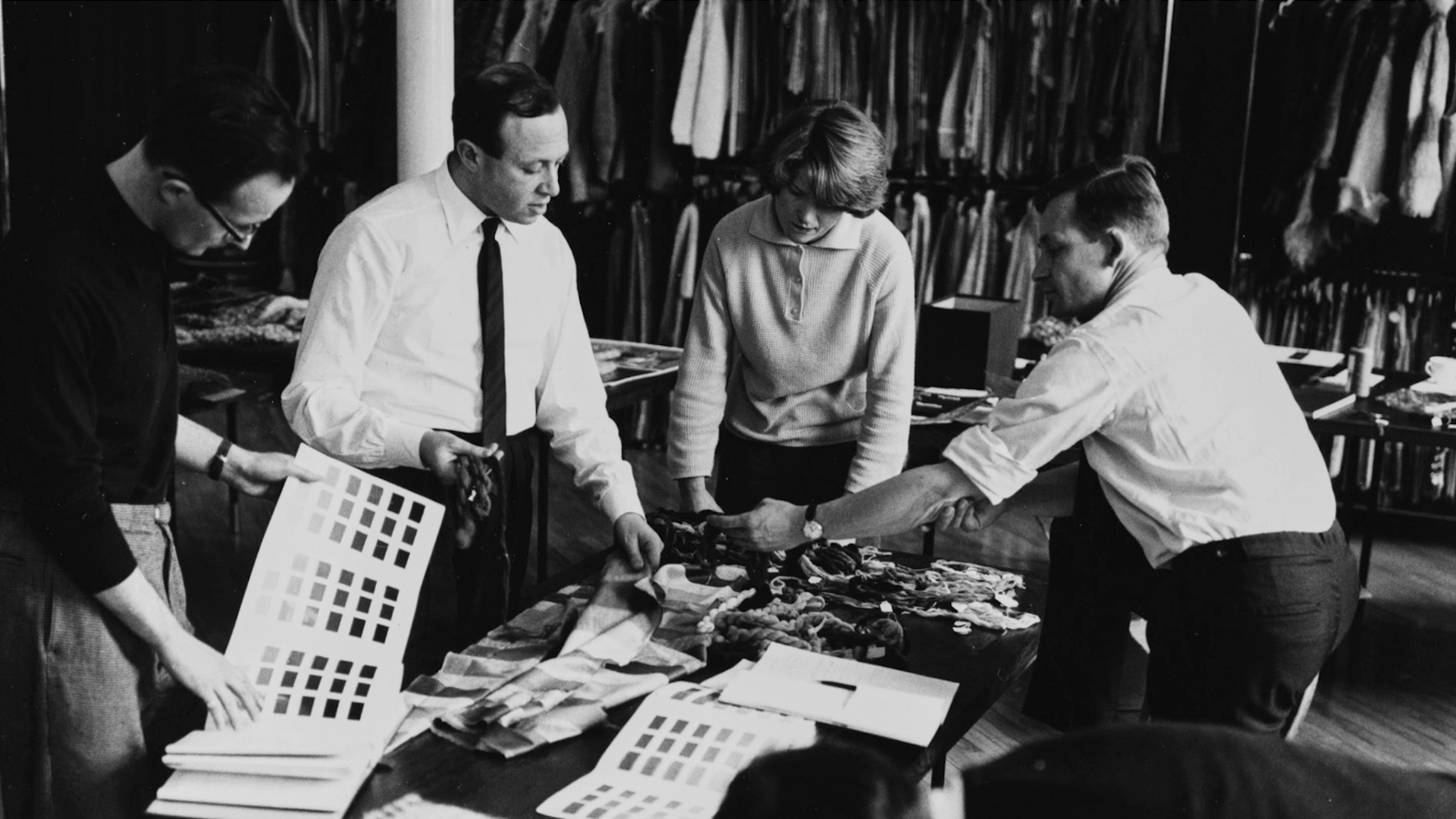
Bernat Klein in Netherdale Mill, Galashiels, courtesy National Museums Scotland.
Within the first chapter, ‘Why this book was written’, Klein explains his position on objectivity, often demanded in his work but ‘a state of grace which I do not often attain’. In Chapter 2 he addresses directly the second meaning of his title, with wise words detailing just why design matters so much:
“The milestones of human progress, however, stand firmly on a foundation of imagination: on the conception of the inconceivable by scientists, philosophers and artists. It is on this foundation that others, with less original ideas, can build their systematic, perhaps mechanical, constructions. Certain clichés of scientific methodology must not be allowed to obstruct the true importance of the rôle of the imagination. Facts are sacred. Imagination can change them by creating new ones. Design, therefore, means the exercise and the application of imagination; a word that has lost much of its meaning, but which, when freshly used, implies a flight of fantasy, the materialisation of intuition, the creation of something out of nothing.”
Klein’s commentary is sometimes so prescient that occasionally I had to remind myself of that fact. For example, he might well have been writing of today’s impact of social media when he began his chapter on education and visual literacy with this paragraph:
“To have a point of view, to be prepared to live by it, to defend it or even perhaps to propagate it, is not, in itself, of over-riding importance. Many thoroughly bad and even evil points of view have been and are being defended and bravely fought for; that does not change them into good views. What matters is to hold, stand by and review informed opinions based on up-to -date facts, arrived at after open, broad-minded consideration.”
One cannot do justice to such an enriching account of design, compared as it is to European and American viewpoints too. The images, all in black and white but no worse off for that, give some indication of Klein’s dismay with British postwar architecture – one labelled ‘Manchester (or Moscow?)’ – and approval of Scandinavian examples.
“In total this book provides a first-hand commentary on what propelled him to create his own home and Studio with the modernist architect, Peter Womersley. It also captures his positivity. It is more than worth reading; it is essential reading!”
Mary Schoeser is a Textile Historian, Curator and Author. Currently an Honorary Senior Research Fellow at the V&A Museum, Mary is also Patron of the School of Textiles, Coggeshall.