

“I am fascinated by the construction of knitwear and want to push the boundaries of these structures into fashion as well as interiors.”
The launch of my brand Rachel Sophia began after I graduated from The Glasgow School of Art with a BA (Hons) in Textiles in 2024.
When the Bernat Klein Foundation approached me about the idea of a collaboration, I was excited to learn about Klein’s design philosophy and his attention to detail. Working across both fashion and interiors, his approach and practice spoke directly to my own creative practice. The more I studied him, the more I was drawn to his knowledge and use of colour. What looks random in his finished cloth was a carefully scripted palette, the result of hours of experimentation and innovation. Until exploring the idea of the collaboration with the Foundation, I had always used knitting as a base for structure and sculpture, but had never explored colour in such depth.
The Project:
My project is a design and research-led collaboration with the Bernat Klein Foundation that explores design as a way of living, rather than as a series of isolated objects. Drawing on Bernat Klein’s holistic design philosophy, in which textiles, architecture, colour, art, and daily life formed an interconnected ecosystem, the project has explored and translated these ideas into contemporary knitted objects that can be worn, lived with, and inhabited.
Rather than treating knitwear as purely fashion or purely domestic design, the project positions knit as a spatial material: one that operates across scales and contexts, from the body to the home. Through the development of knitted bags and lighting, the work dissolves boundaries between clothing, interior space, and atmosphere, reflecting Klein’s belief that design should shape how we experience everyday life.
Drawing on my existing practice in knitted bags and domestic objects, the project uses knit’s tactile and structural qualities to reinterpret Klein’s ideas through a contemporary, feminine lens. Highlighting the importance of his philosophy and celebrating the notion that design can be interconnected and integrated into our daily lifestyle.
Research Context: Bernat Klein
Bernat Klein’s practice extended far beyond textile production. His work encompassed painting, colour theory, industrial textile design, architecture, and landscape, culminating in environments such as High Sunderland and the Bernat Klein Studio, designed in collaboration with modernist architect Peter Womersley. These spaces embodied Klein’s belief that design is not decorative, but structural, experiential, and lived.
High Sunderland in particular functioned as a total environment, a place where living, working, and making coexisted. Light, proportion, colour, and material were carefully orchestrated to support creativity and contemplation. This project takes Klein’s approach as a conceptual framework rather than a visual reference, using his philosophy to inform how objects are designed, used, and experienced today.
Conceptual Framework
The central idea of the project is the notion that textiles can act as environments rather than surfaces. Knit is explored not as applied decoration, but as a structural system capable of shaping form, light, and atmosphere.
Key conceptual principles include:
Design as an integrated ecosystem: Objects are conceived as part of a broader living environment, rather than standalone products. Bags and lighting form the primary outputs, with soft objects used as exploratory studies where relevant.
Knit as structure: Form emerges through stitch density, tension, and construction, rather than through added components or ornamentation.
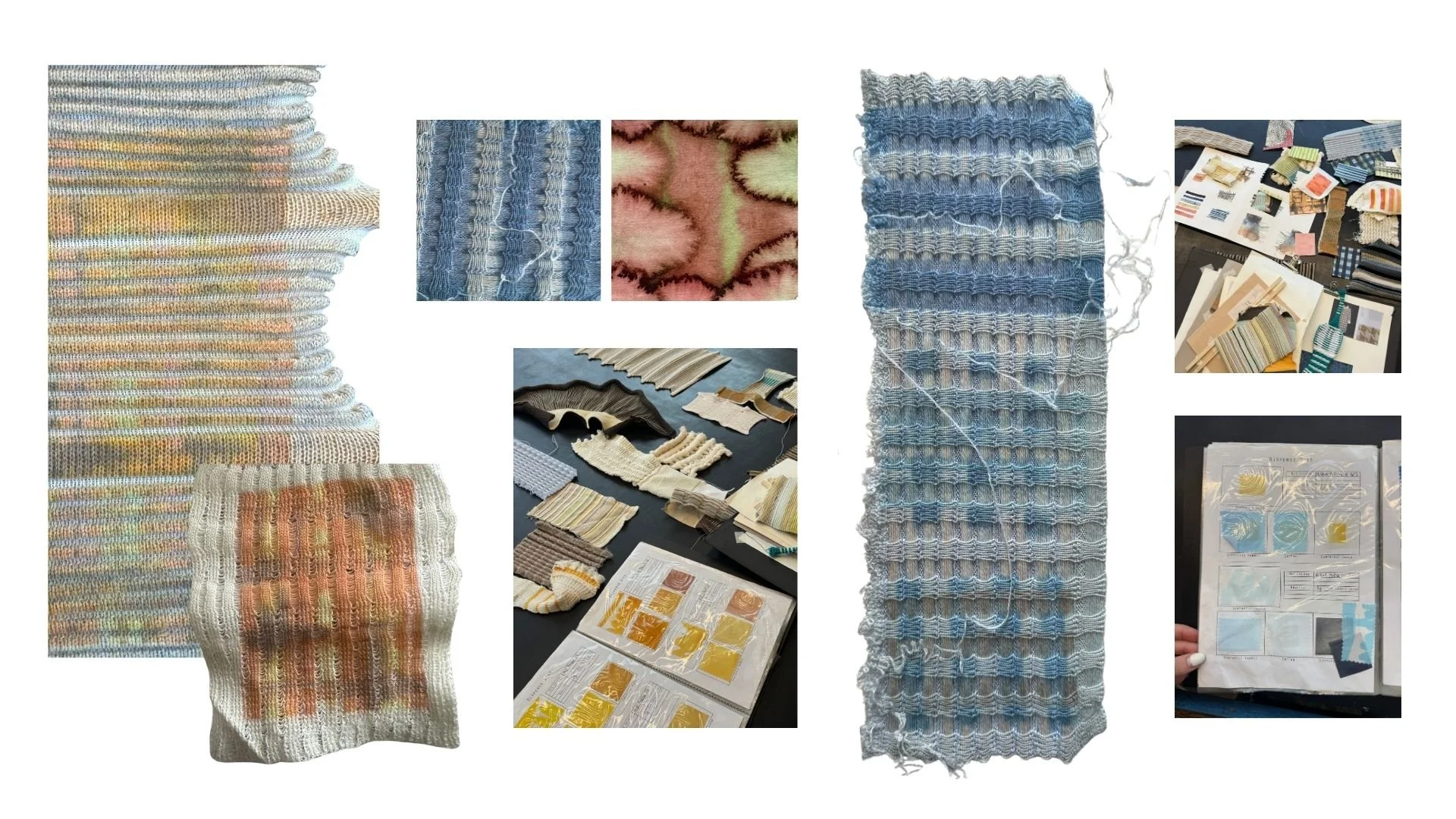
Light as material: Inspired by Klein’s studio and its use of diffuse natural light, knitted structures are used to filter, contain, or release light. Drawing on his extensive colour theory to create an inspired knitted fabric.
Stillness and calm: Objects are designed for moments of pause for domestic, everyday contexts rather than performative or trend-driven use.
Design Methodology
The design process will be rooted in secondary source analysis and material experimentation. Architectural elements from High Sunderland and the Bernat Klein Studio as well as Bernat Klein’s colour work, across textiles and paintings will be studied to develop a restrained, colour palette. Rather than replicating specific colours, the palette will be informed by his approach to colour as depth, atmosphere, and structure, often influenced by landscape and natural light. These analytical studies will inform a series of knit experiments, leading to the development of resolved objects. These studies will be translated into knitted structures through variations in stitch density, tension, and scale, allowing architectural ideas and colour to inform the final forms.
Relevance to Contemporary Practice
In a design landscape often driven by speed and trend cycles, this project advocates for a slower, more thoughtful approach rooted in material understanding and lived experience. By revisiting Bernat Klein’s belief in design as a way of living, the work offers a contemporary interpretation that aligns with current conversations around sustainability, longevity, and meaningful design.
The project also reflects a broader interest in dissolving traditional boundaries between fashion, interiors, and art positioning knit as a medium capable of operating across these disciplines.
“This project was made possible by the support of the William Grant Foundation, whose funding gave me the creative time to research Bernat Klein and his legacy in depth.”
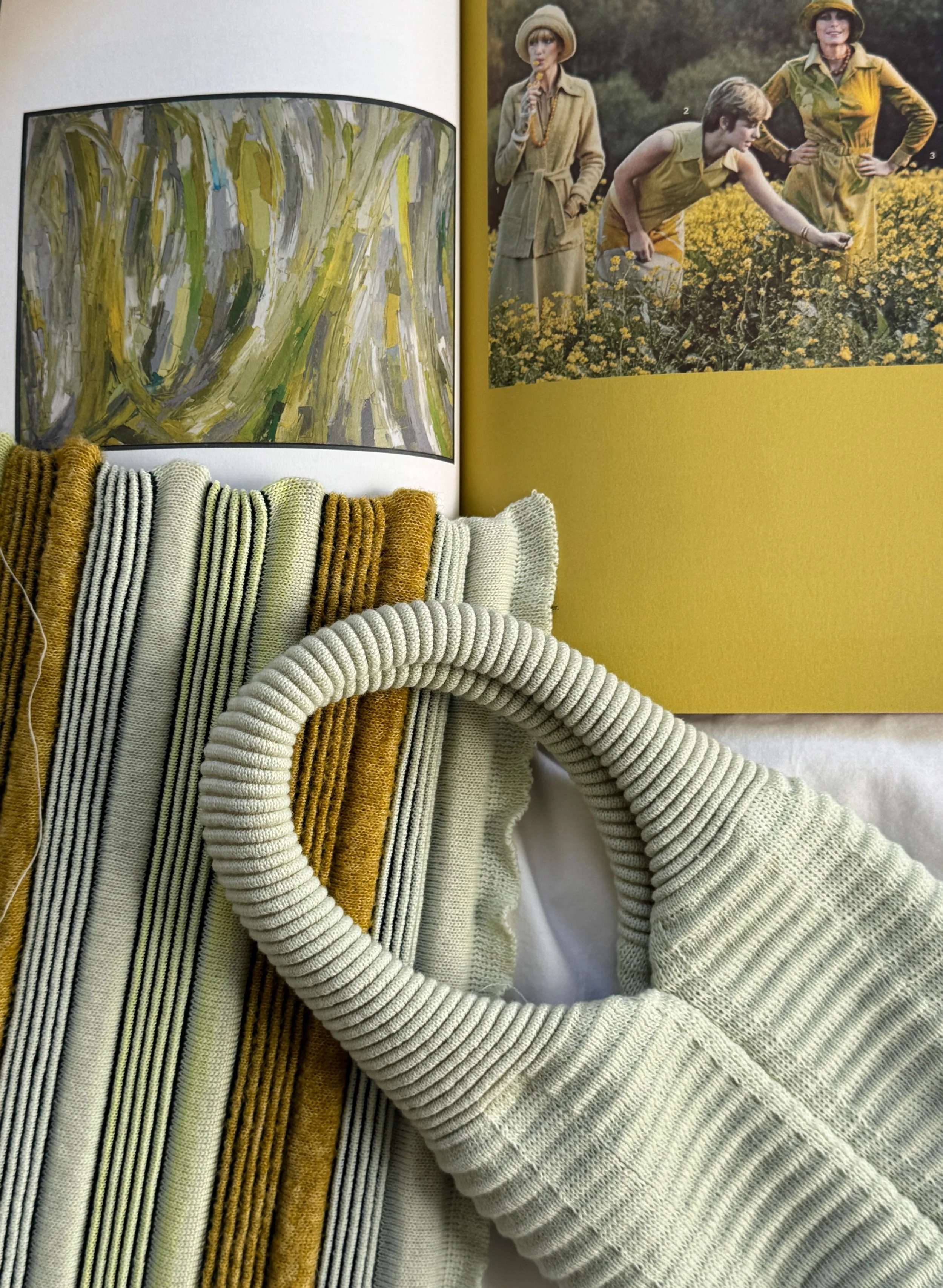
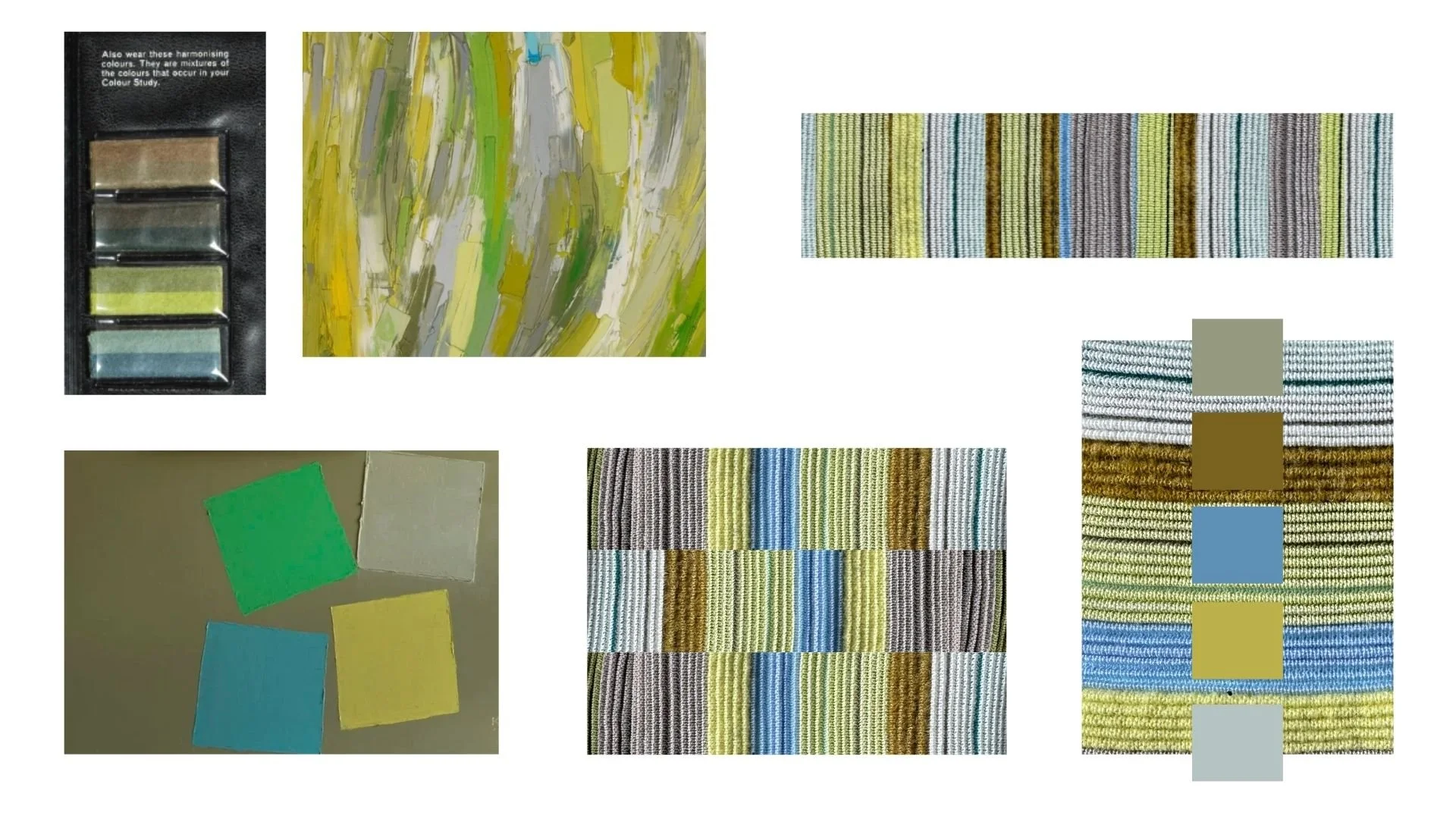
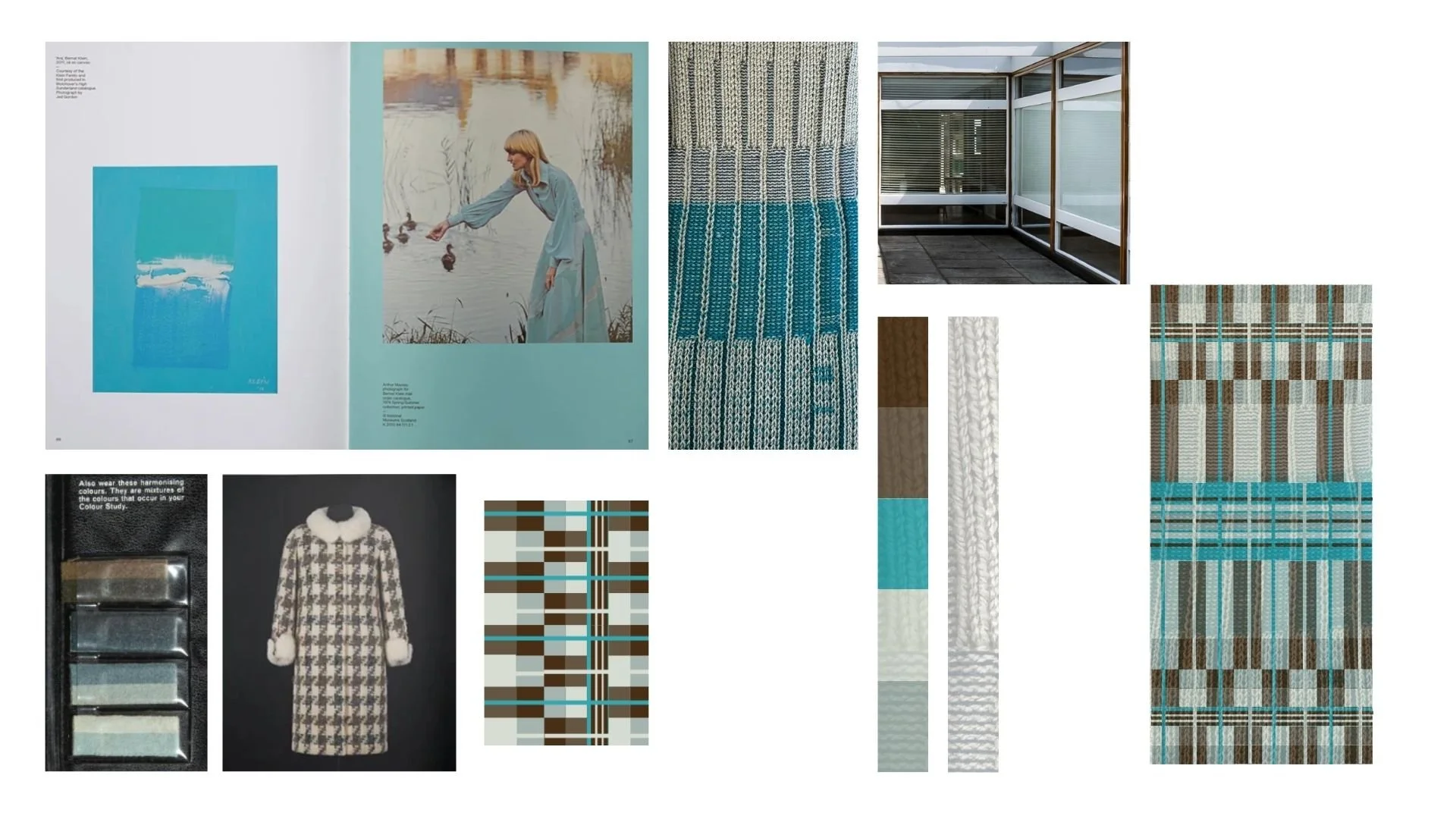
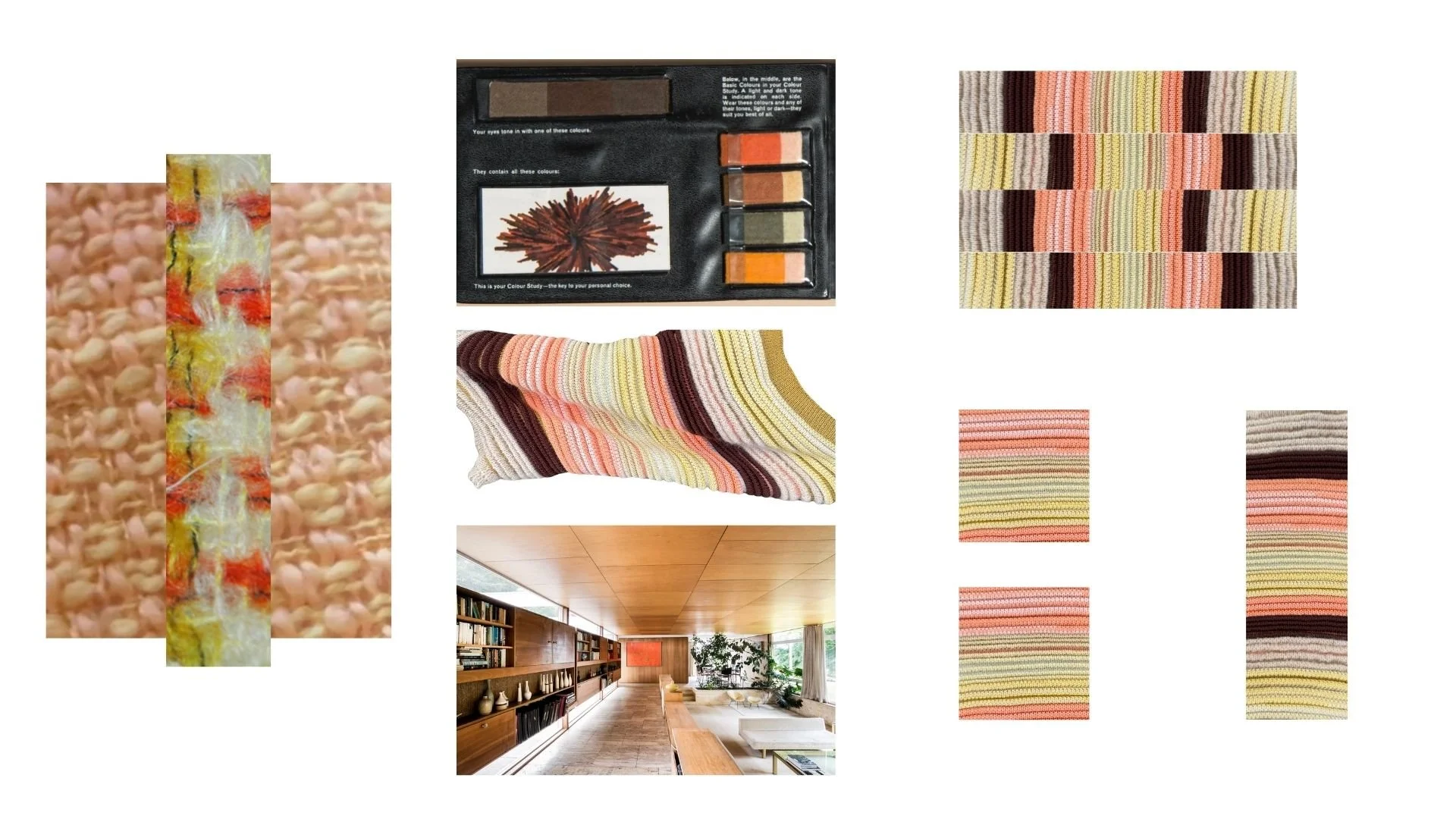
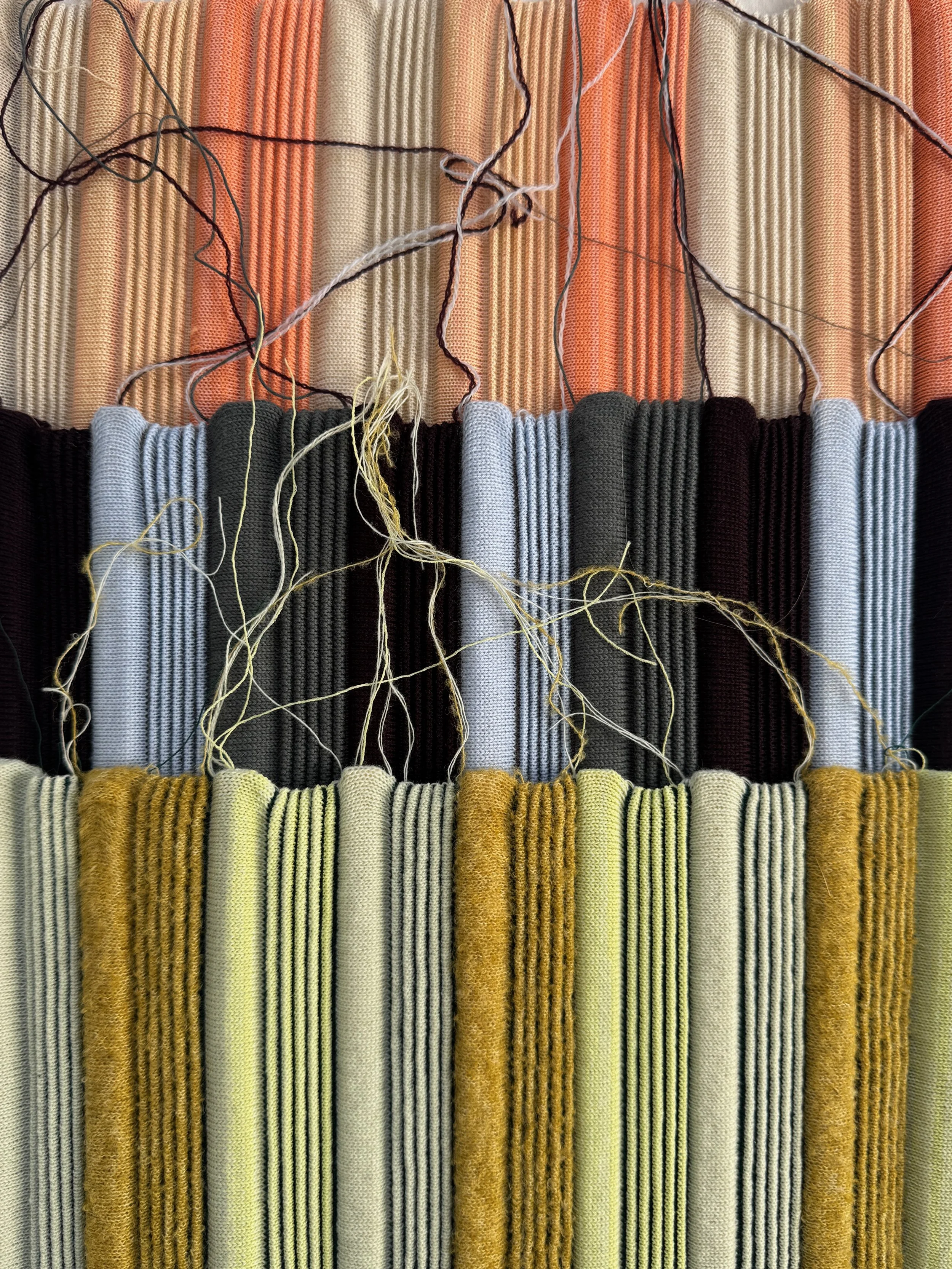
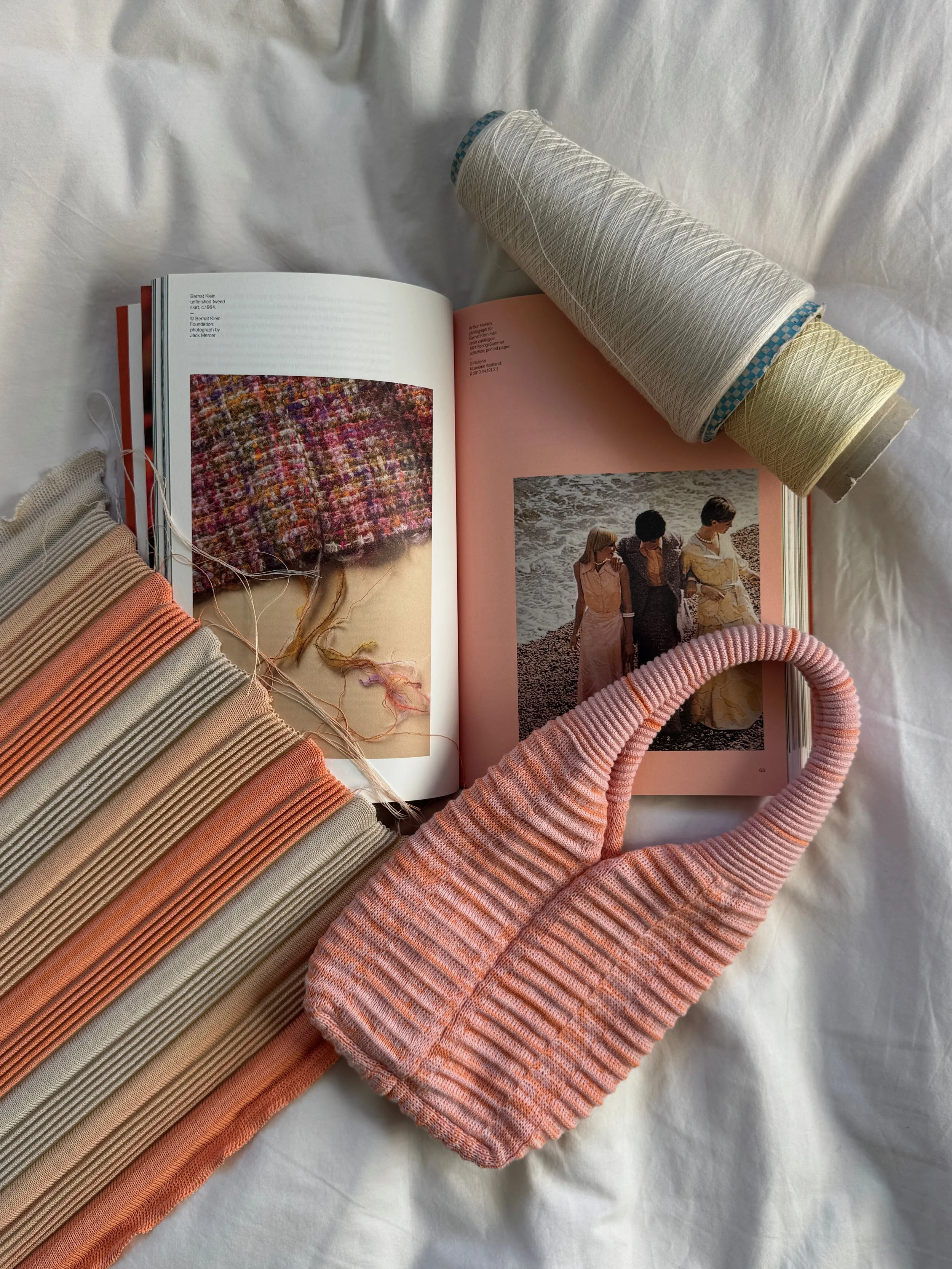
My new collection Colour Studies draw on the work that inspired me most: Bernat Klein paintings Ara and Lichen 3.
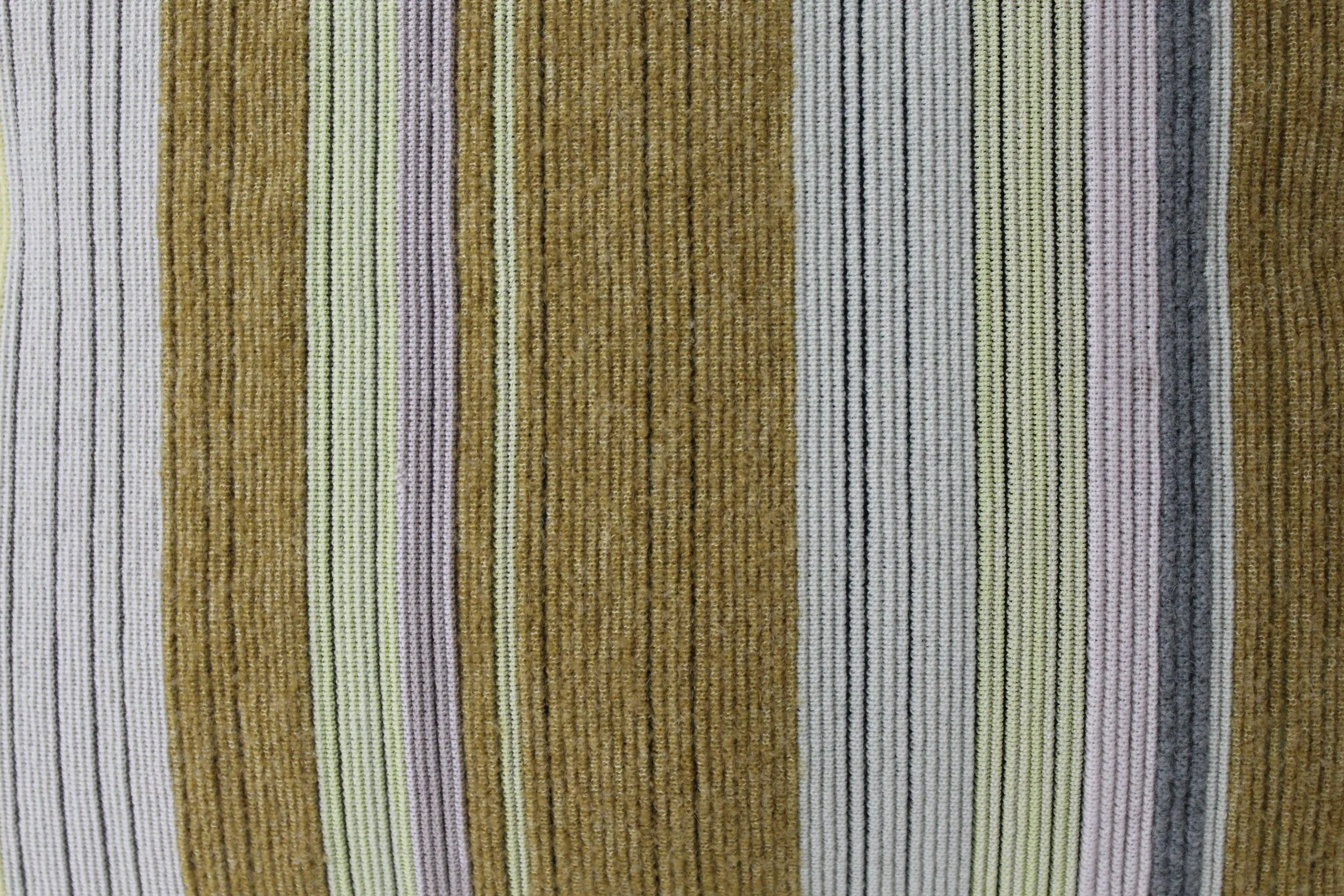
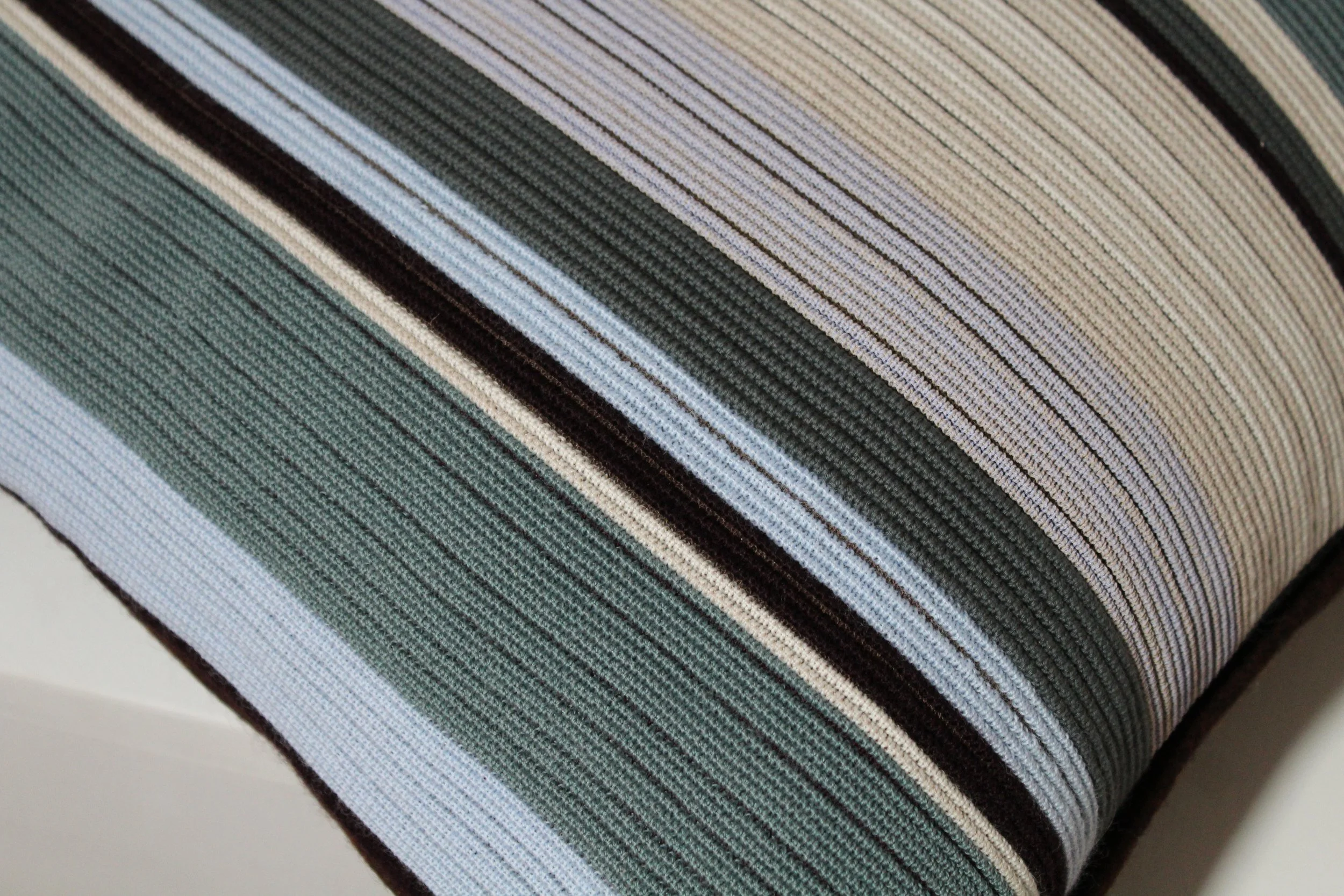
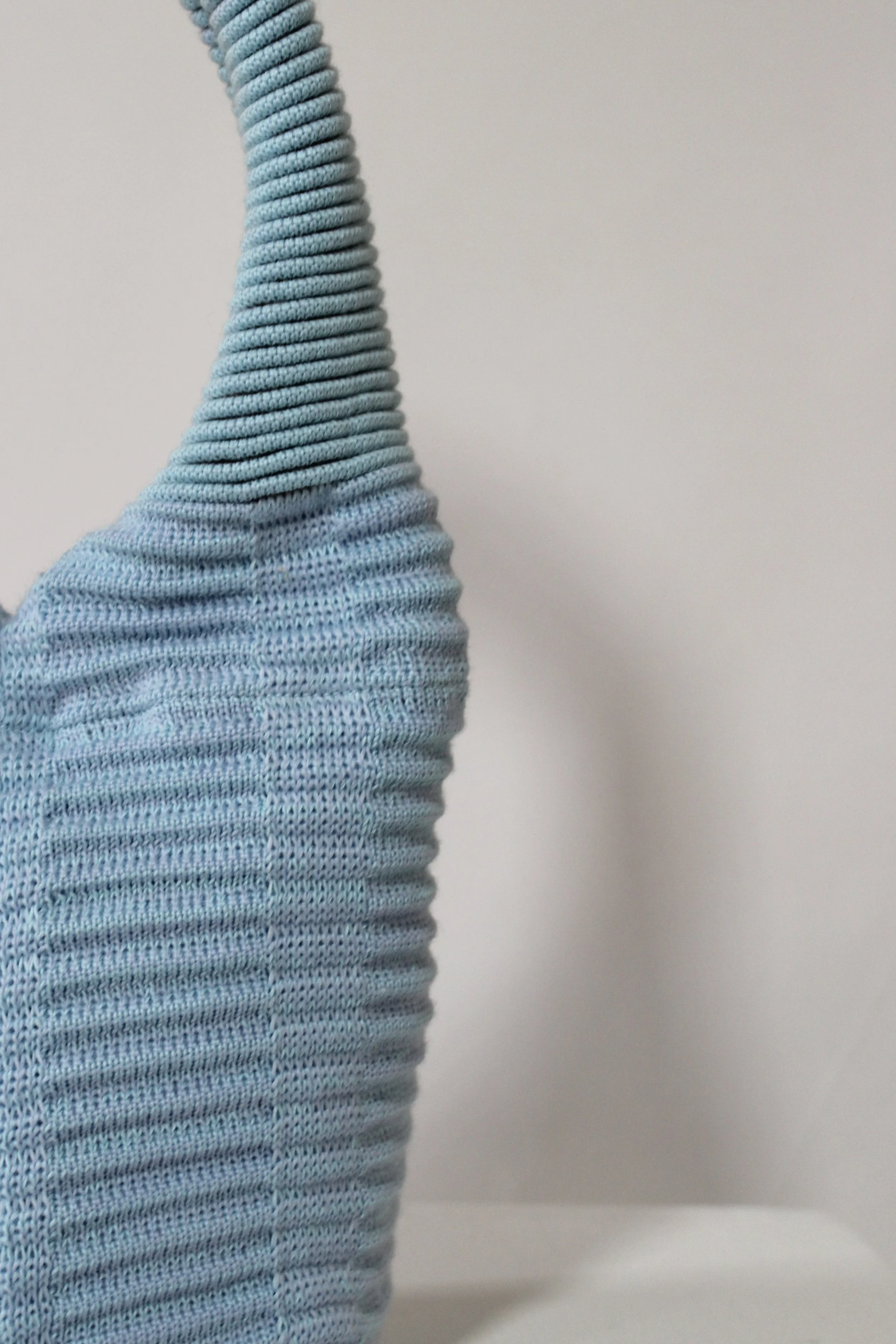
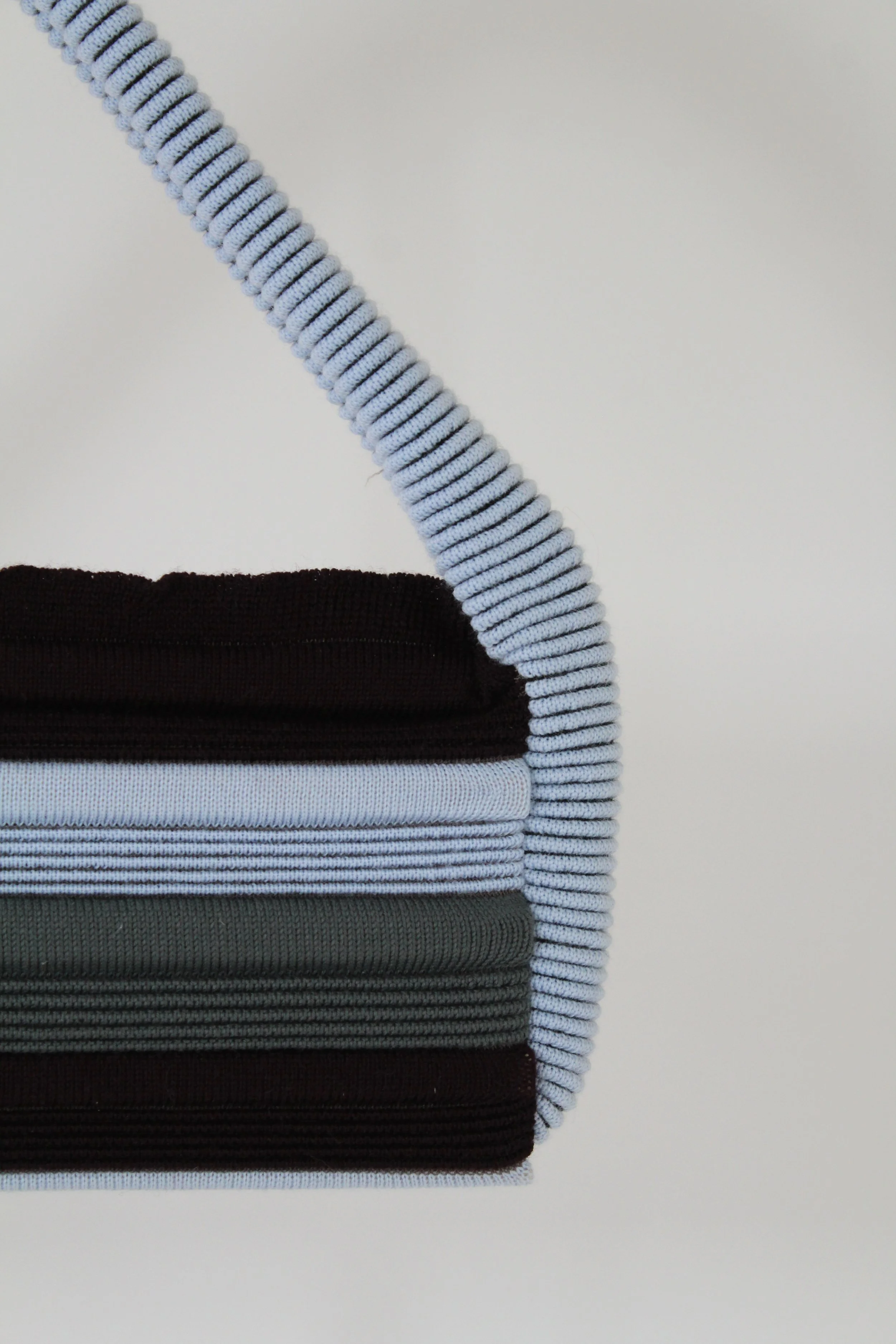
Embedded within the design of the knitted structure, elastic pulls sections of the fabric closer together, which gives the surface its ridged, sculptural quality and adds nuance within the stitch. The collection Colour Studies has three ‘looks’ each with a cushion and two bags of differing sizes.
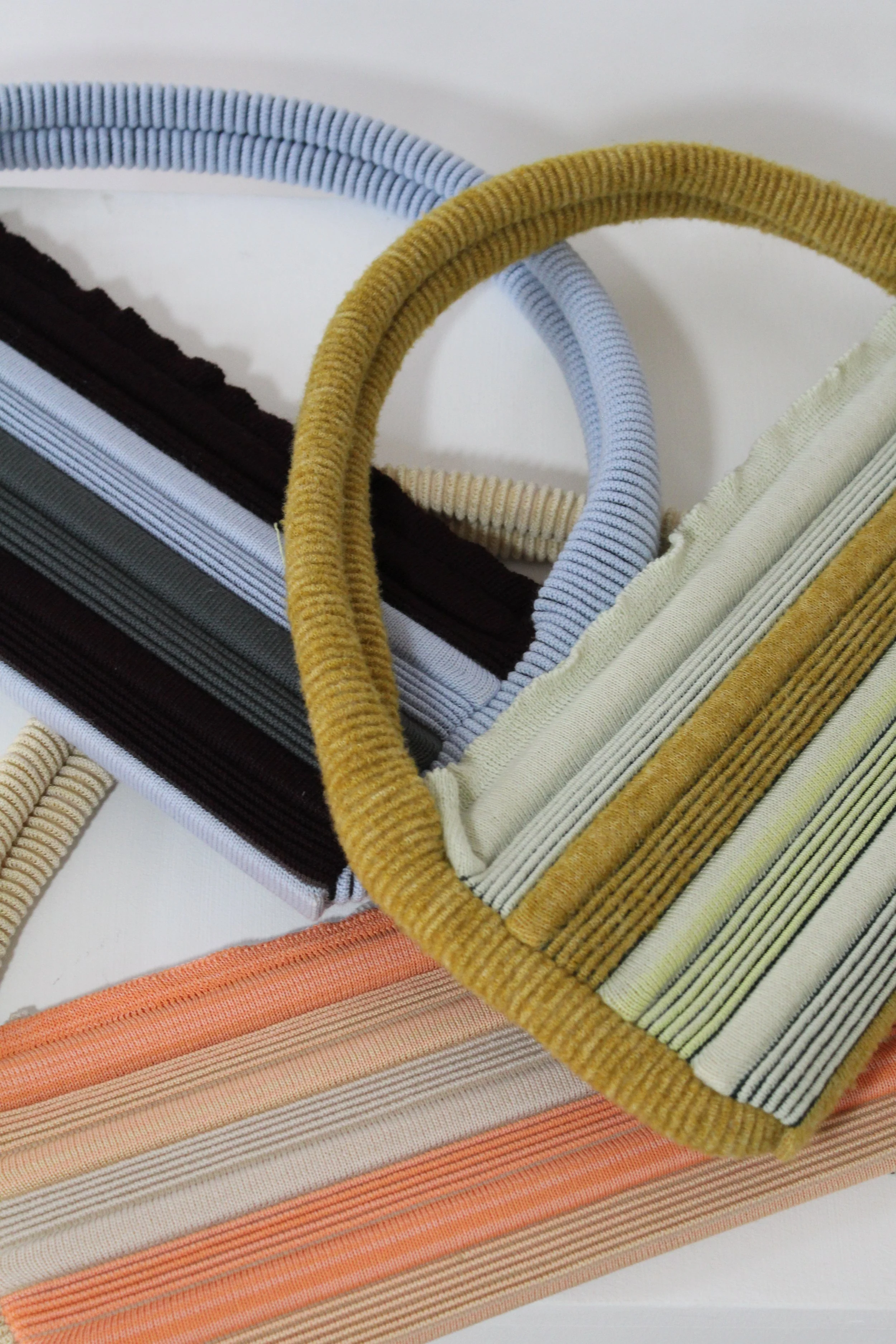
Each of the nine products are handmade and unique pieces. My process is sustainable as I work with dead-stock yarn, which comes from factory production and would otherwise be counted as waste product. My strong belief is than every piece should carry its own story. Once a piece is sold, that exact colour way cannot be made again.
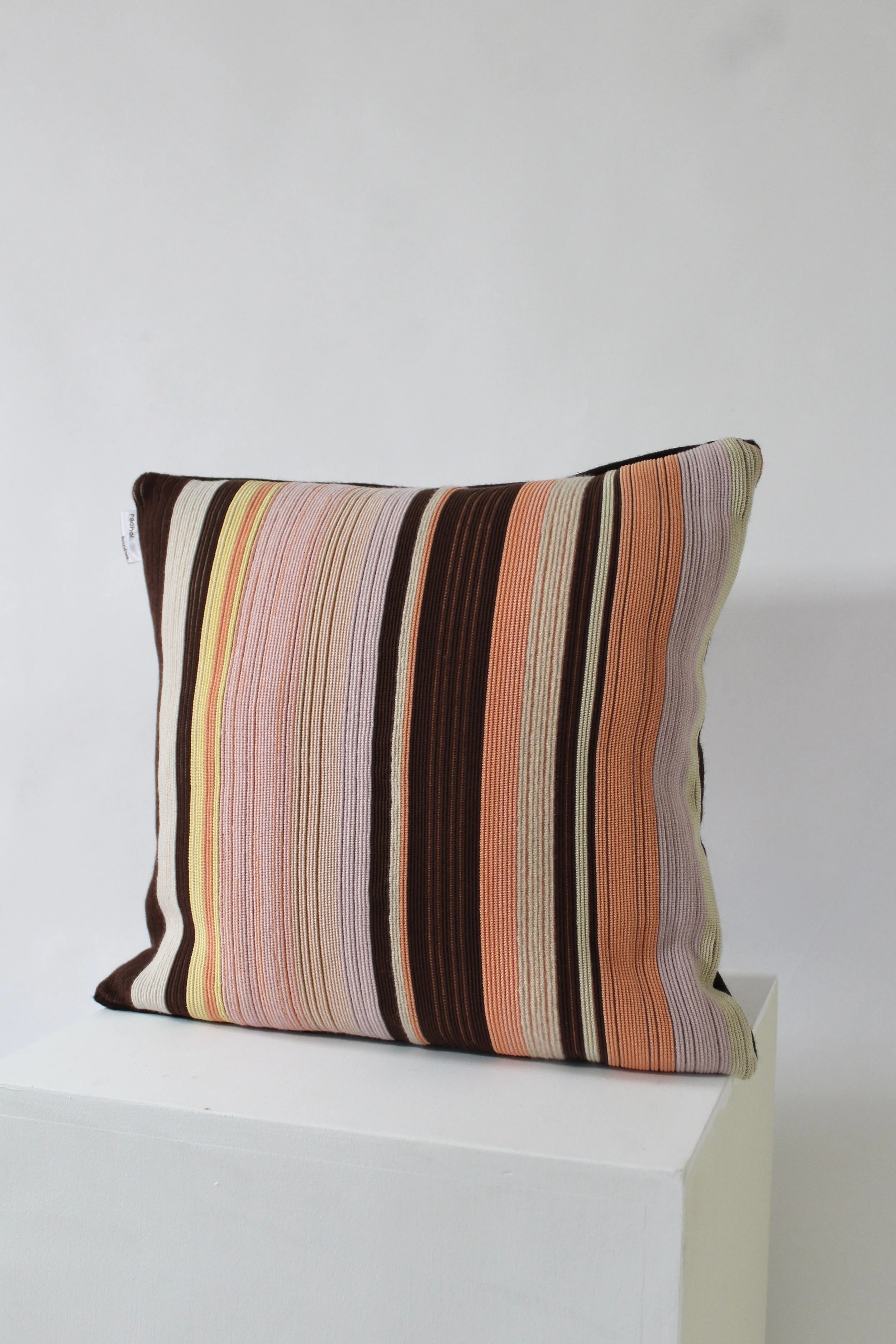
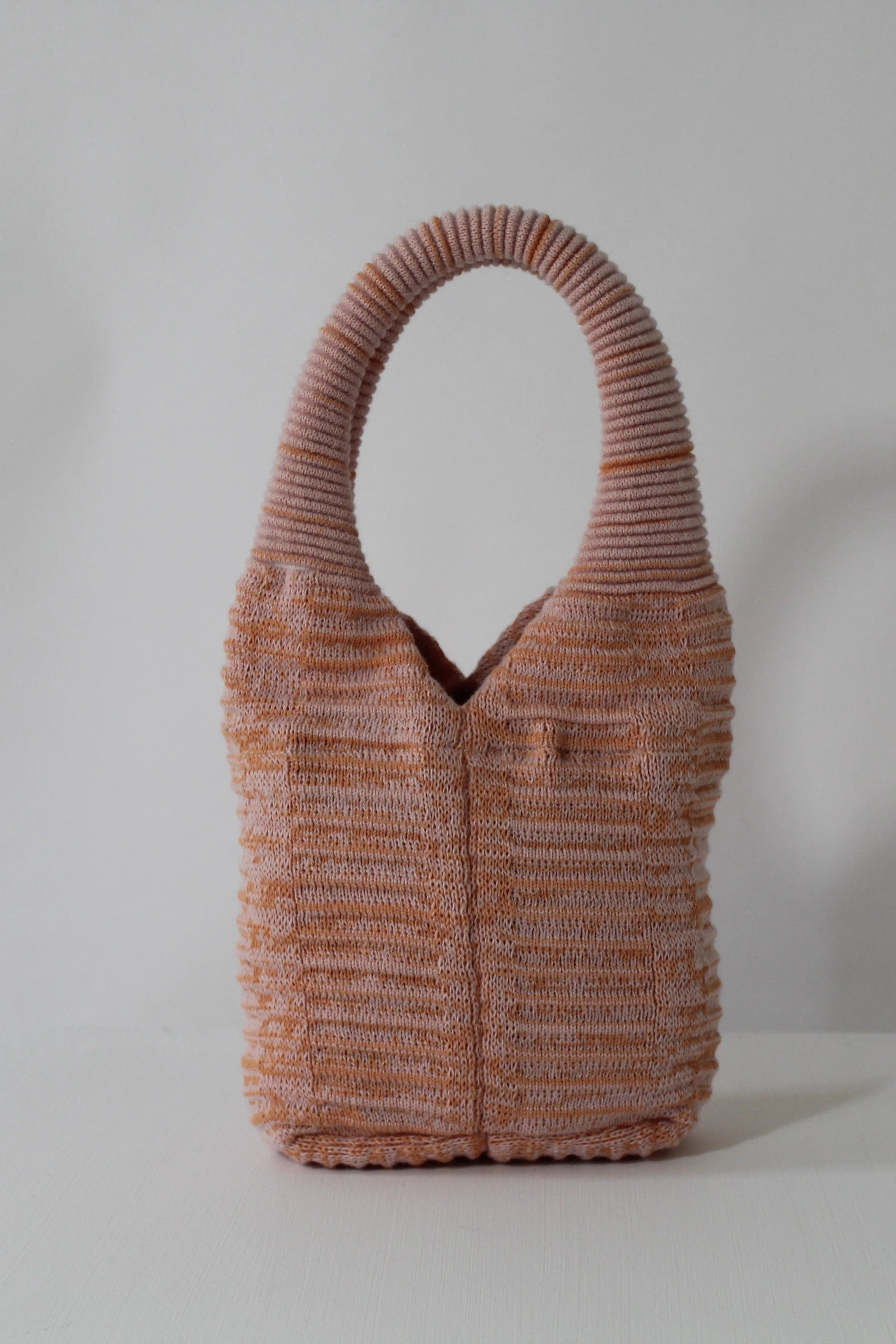
I wanted to create my own sequence within knitting that could give me the right colour ratios. Nature has always been my main source of inspiration, so I turned to the Fibonacci sequence, which can be found in shells and plants. I calculated the size of each product and built colour stories around the sequence. It let me vary the colours freely while knowing the ratios would always be easy for the eye to read.
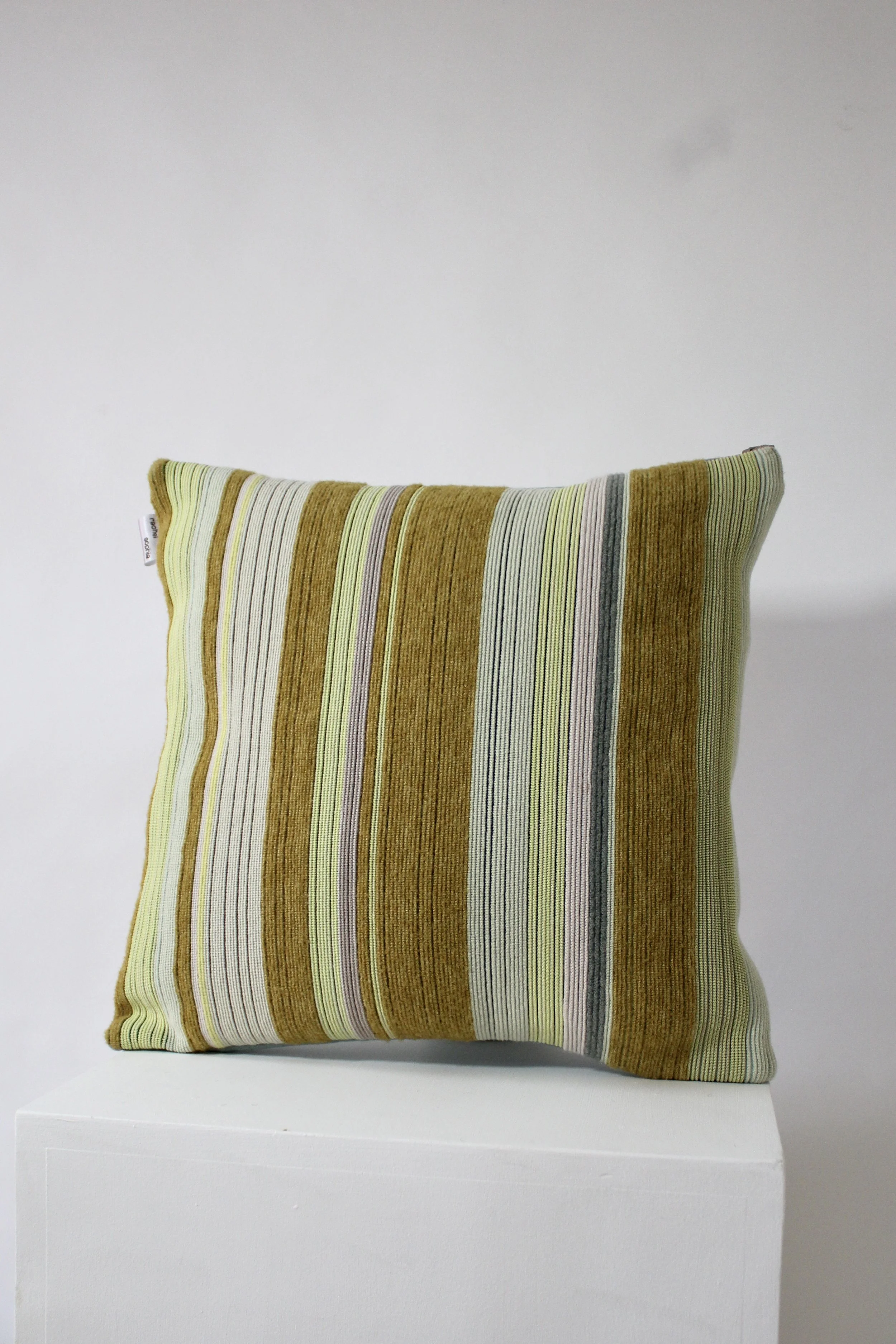
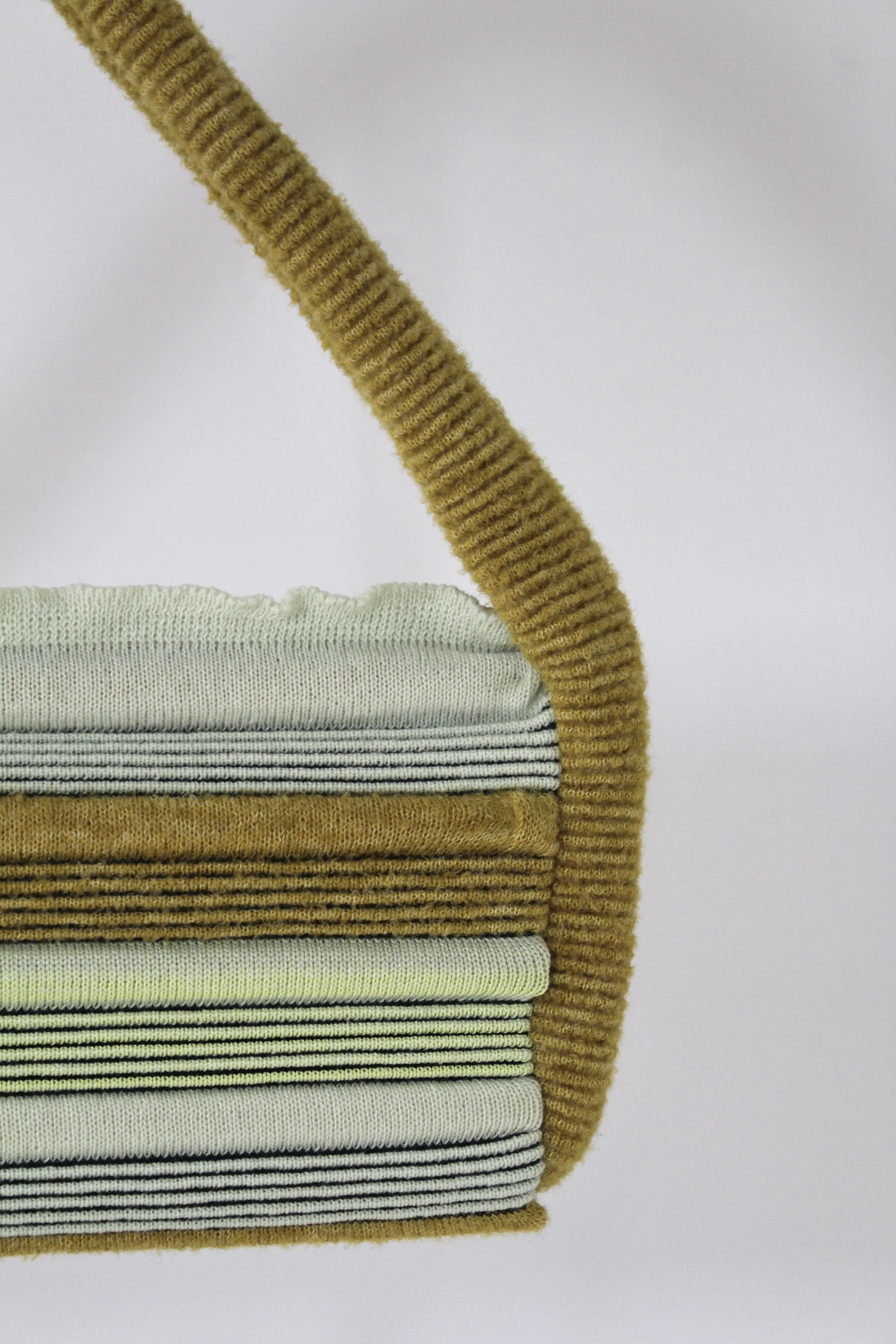
During the collaboration I have been mentored by the Bernat Klein Foundation and The Glasgow School of Art. A GSA Summer Residency gave me the opportunity to work within a creative and focused environment with access to specialist knitting equipment in GSA to test and develop my ideas.
“The opportunity to share my ideas and development with tailored support from both the BKF and GSA at the beginning of my career, has been a wonderful and rewarding experience. ”
The ‘Colour Studies’ design collection can be viewed on https://bernat-klein-foundation.myshopify.com/collections/textiles
As a sole practitioner I work on a commission basis using a finite supply of dead-stock yarn. This sustainable process means that each product is made in the closest available colours rather than an exact match. My collection Colour Studies is unique to my design studio, and is inspired by Bernat Klein and his lifelong exploration of colour and texture.
My specialist study in Textiles has opened up the relationship between Fashion and Interiors. In using one medium, knitted textiles, my ambition is to bridge the gap between creating sculptural interior pieces and fashion accessories.
If you would more information on special commissions please contact Rachel at - rachelsophiadesign@gmail.com