
GSA Textiles x Bernat Klein Foundation
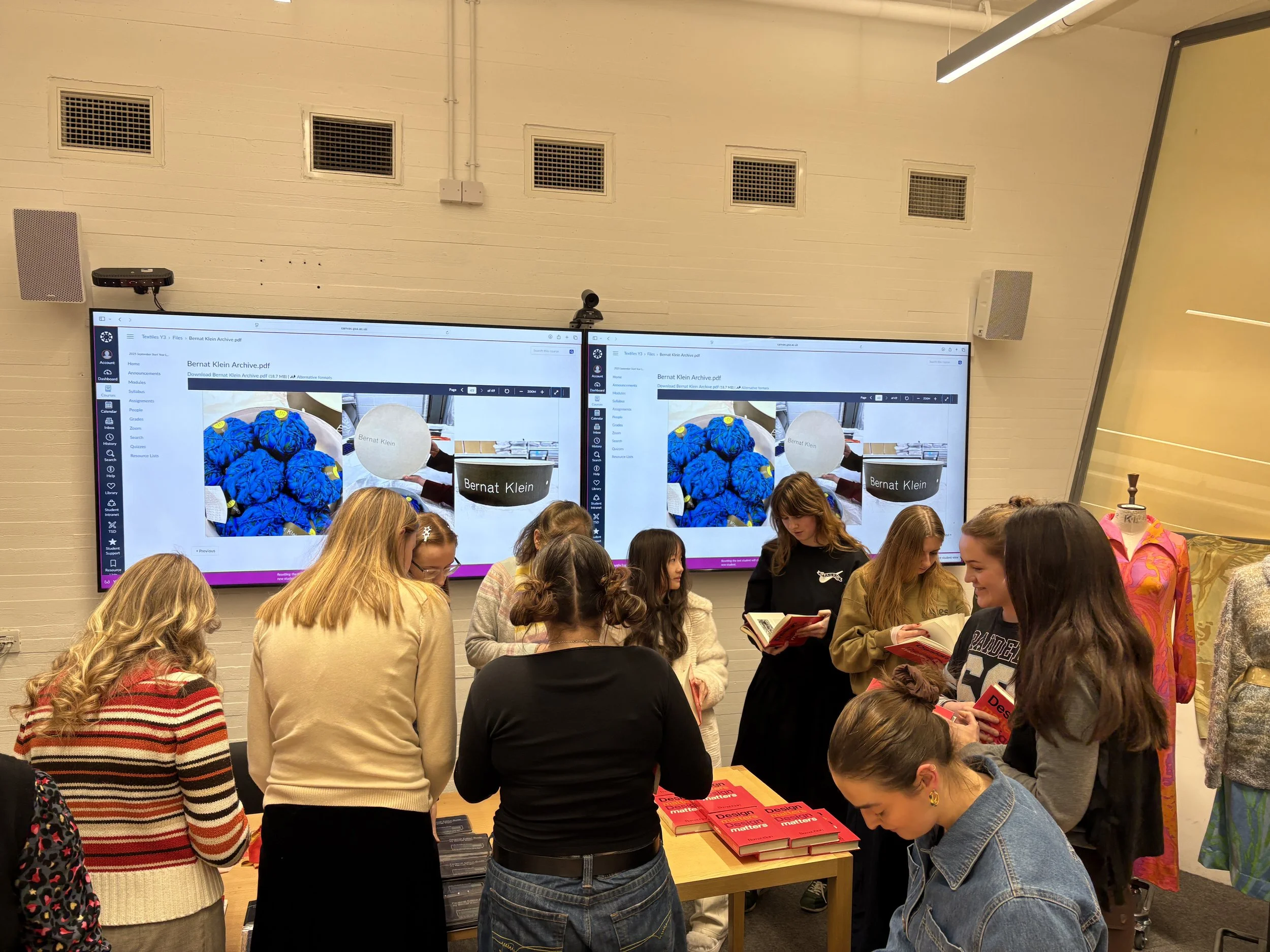
Project Launch, GSA Reid Building, February 2026
“Thank you to the Bernat Klein Foundation for their support for the project, and for introducing the next generation of textile designers to the legacy of Bernat Klein.”
GSA Textile Design Team
The brief set up the hypothetical scenario that Colourcraft - Klein's textile company originally established in the 1950s, was being re-established today. Students were charged with heading the design team responsible for the relaunch and asked to challenge the sameness of Klein’s manufactured textiles. With a focus on colour and materials remaining central to the new company ethos, but with consideration of how a new generation of customers might engage with the brand and how issues of sustainability could be integrated into its future direction.
The project launched with an inspiring lecture from Dr Lyndsey Calder, Bernat Klein Trustee. Students were introduced to the life and work of Klein, the inspiration behind his textiles and fascination with colour. Fabric samples, impossible not to touch, gave the opportunity to examine some of Klein’s original textiles, providing a tangible connection to his work and valuable insight into his experimental design and production process.
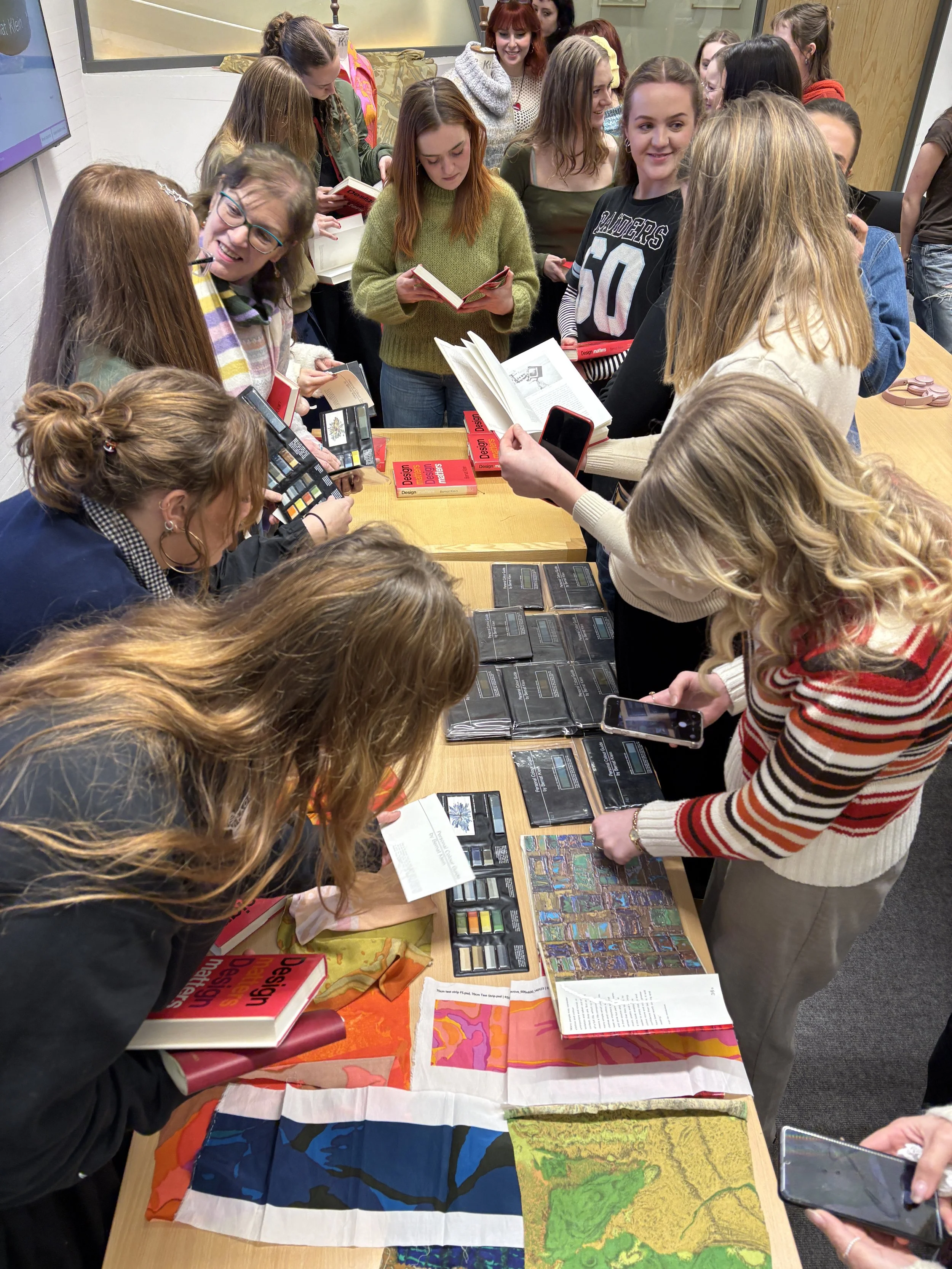
Project Launch, GSA Reid Building, February 2026
Eager to start the project, students gathered their primary research focusing on colour, considering Klein’s points of inspiration and also what they themselves were drawn to, as designers working today. GSA’s specialist print, knit, weave and embroidery workshops became full of colour and texture as students began to translate their research through technical sampling. The resulting work demonstrated innovative approaches, with painterly effects achieved through knit structures and yarn combinations, and unconventional materials incorporated into woven textiles. Embracing Klein’s experimental ethos, students produced vibrant and imaginative responses that celebrated colour, material, textile processes and creative risk-taking. The project winners and commended students were invited to contribute to this feature and a selection of responses follow.
Cara Newbery
I was heavily inspired by the paintings of Bernat Klein, as well as other Scottish artists such as Samuel John Peploe and John Duncan Fergusson. I was particularly interested in their use of colour and the texture created from thick brushstrokes and wanted my work to reflect this painterly quality. Klein’s experimental approach to colour especially inspired me, encouraging me to be more playful and experimental throughout my sampling process. His ability to create depth and movement through colour influenced the way I approached my own knitted compositions. I wanted to explore proportion and layering through knit, I used exaggerated fluffy surfaces and bold colour next to tonal, flatter surfaces to create contrast and make the brighter colours appear more visually striking. By incorporating areas of neutral tones, I was able to emphasise the intensity of the colours and create a more balanced composition within the samples.
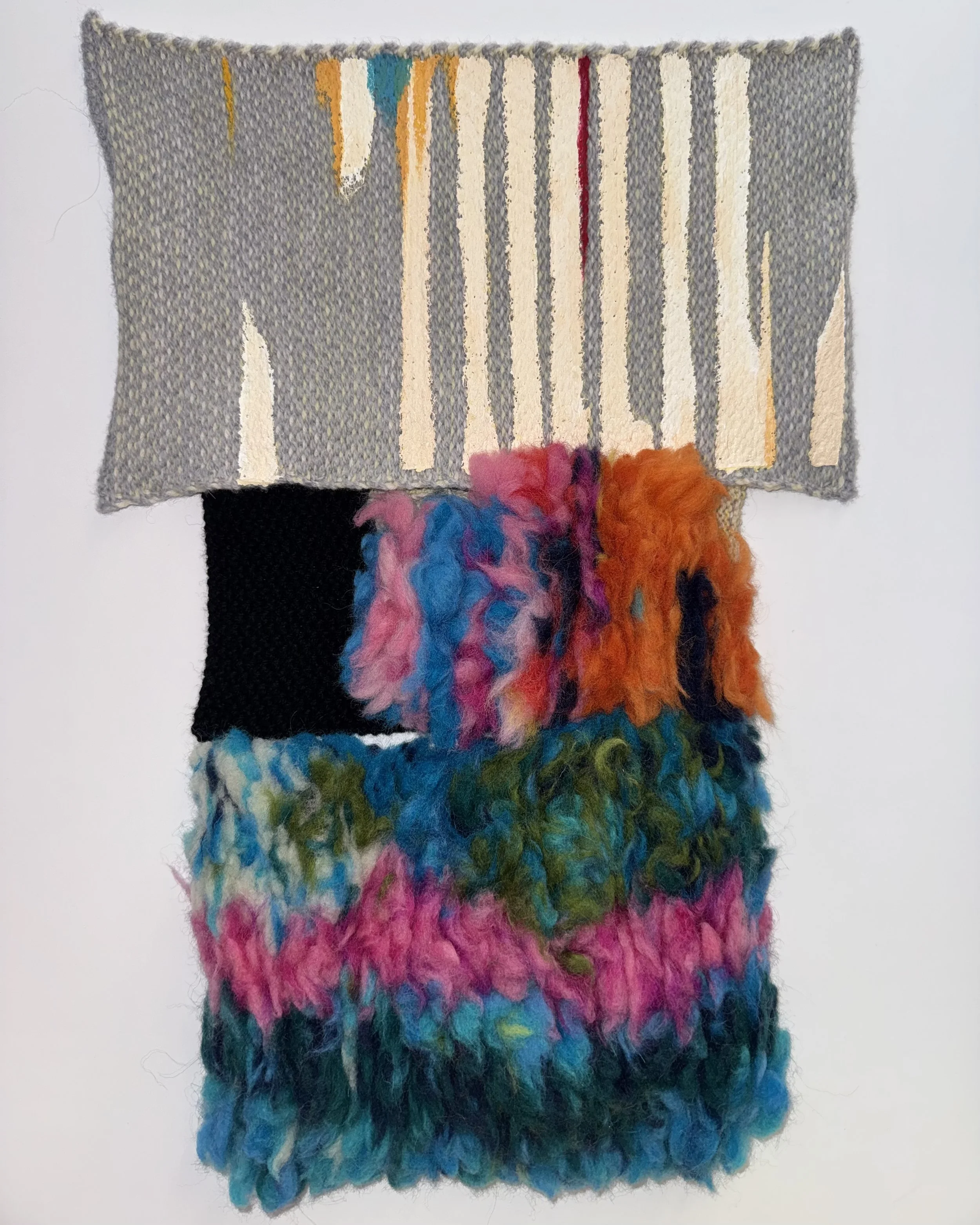
Knitted textile, Cara Newbery, 2026
Kirsten Donnelly
I was initially really inspired by Bernat Klein’s amazing ability so identify colours and how they interact with each other. I wanted to understand how colours can layer together and effect each other, just like Klein observed in his paintings and textiles. My initial spark arose from a photo I took of a dark blue wall with an orange light shining on it, and I carefully analysed how these two opposing colours affected one another. This influenced my knit samples as I started to experiment with layering samples together using an adhesive film. As well as colour I wanted to be very experimental with my materials, so I cut my knitted samples after they had been adhered to one another. This allowed freedom for shape and form within my samples that was really fun to play with after the samples were taken off the knit machine.
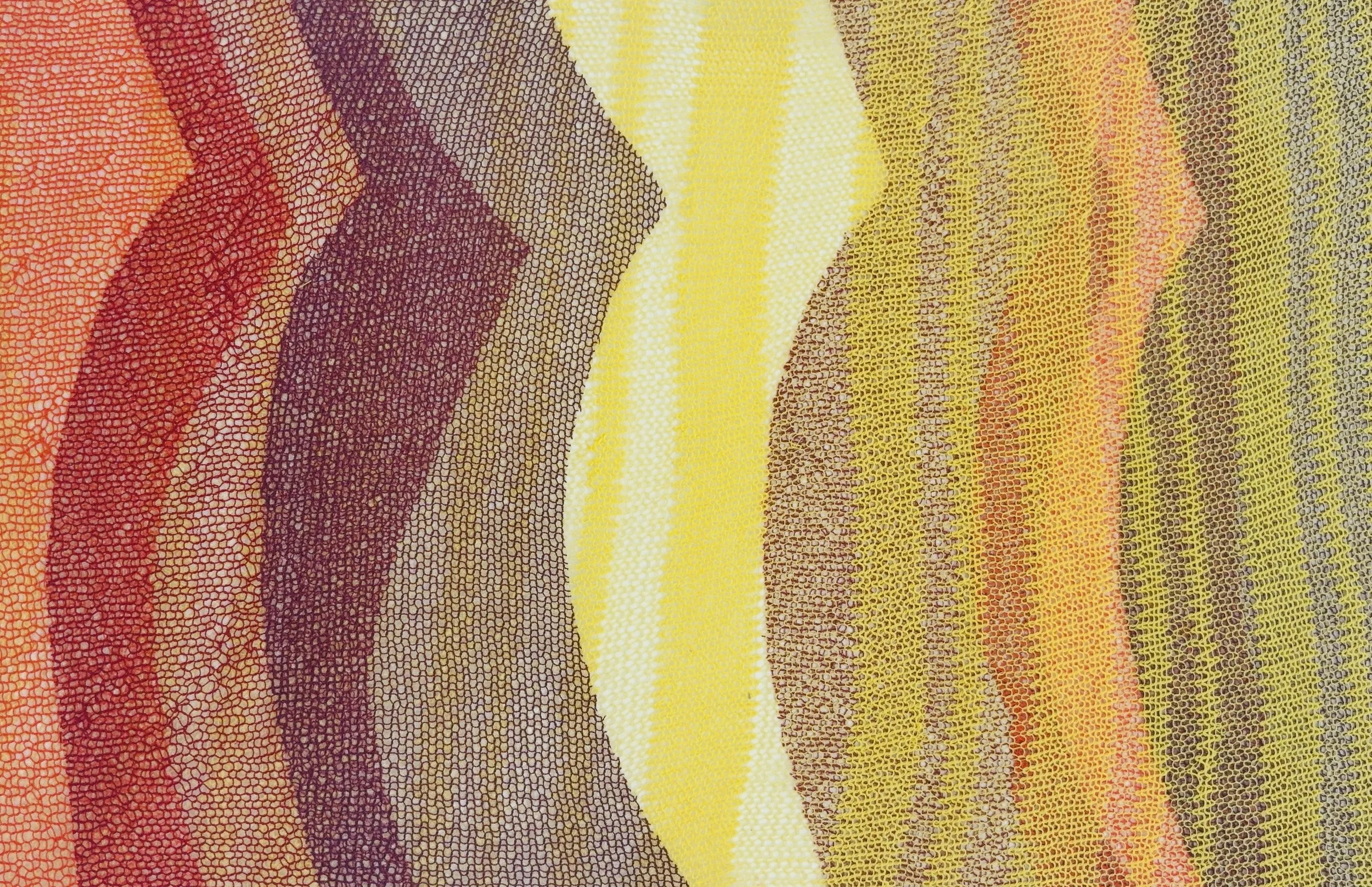
Knitted textile, Kirsten Donnelly, 2026
Lesley Martin McGlynn
My work for this project was inspired by Bernat Klein himself, his influences, process and practice. The application of colour theory by artists such as Cezanne, Klee and Albers in his own paintings, yarns and textiles was an exciting way into the project and influenced my own colour work. I also love the way Klein explores the tactile nature of woven textiles by combining yarn with a variety of materials and colour twists. Klein’s use of colour, materials and experimentation is for me something joyous and liberating. I was excited and inspired to push boundaries by mixing a variety of materials and colours. I could ‘feel’ them coming together to create many different colour combinations and patterns. Nature is also important to me. A key theme in my work is sustainability of materials and processes. Klein used the materials that were available at the time. Today however we need to consider the impact that materials can have on our environment and therefore be open to alternative products; I have tried to do this through the project in combination with Klein’s love of colour and texture in his textiles.
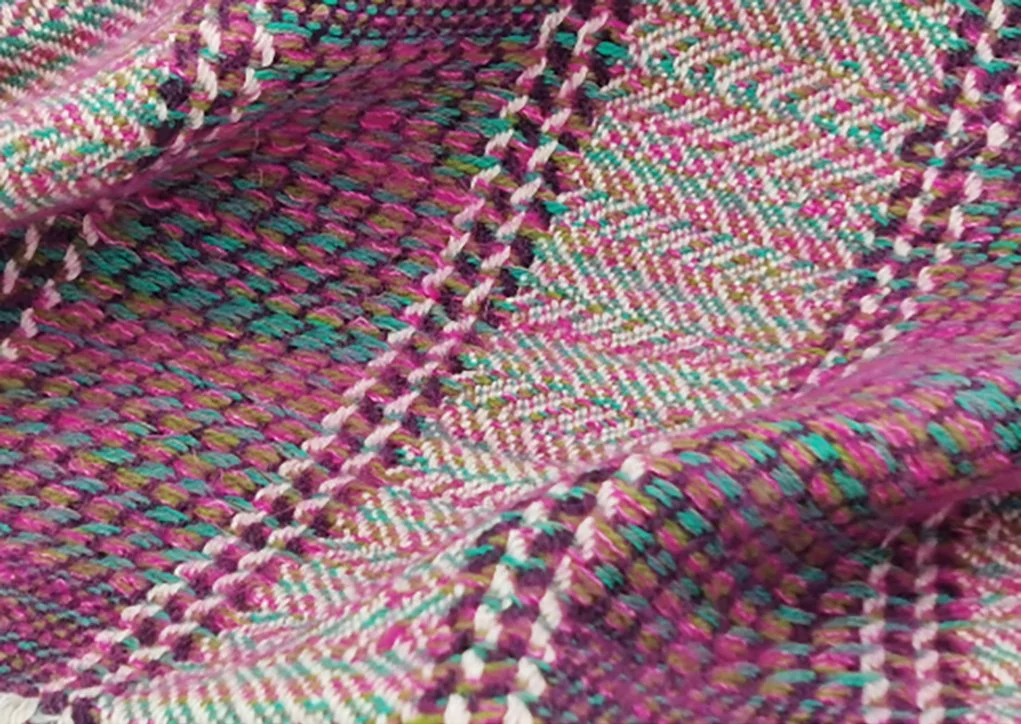
Woven textile, Lesley Martin McGlynn, 2026
Sarah Kefford
I was inspired by Bernat Klein’s use of colour and texture in weave, specifically looking at his work for Chanel in the 1960s and contemporary Chanel runway collections through my research. I really liked the effect that chunkier weft threads like ribbon had on the overall fabrics, and this encouraged me to explore how I could use other unconventional materials in my own work. I focused primarily on translating textural surfaces and reflective qualities from my drawings into samples using materials like discarded plastic packaging and strips of wood, which resulted in three-dimensional samples that reflected light, were quite robust, and held their shape. I found this worked well in a fashion context to be used as panelling that had this armour-like, heavy-duty quality for clothing and fashion accessories. I also really liked how Klein’s blended colours looked different from far away versus close up. In my work I wanted to reinterpret this, and reference his more geometric paintings, by placing emphasis on creating exaggerated colours and obvious shapes that stood out in a repeat pattern.
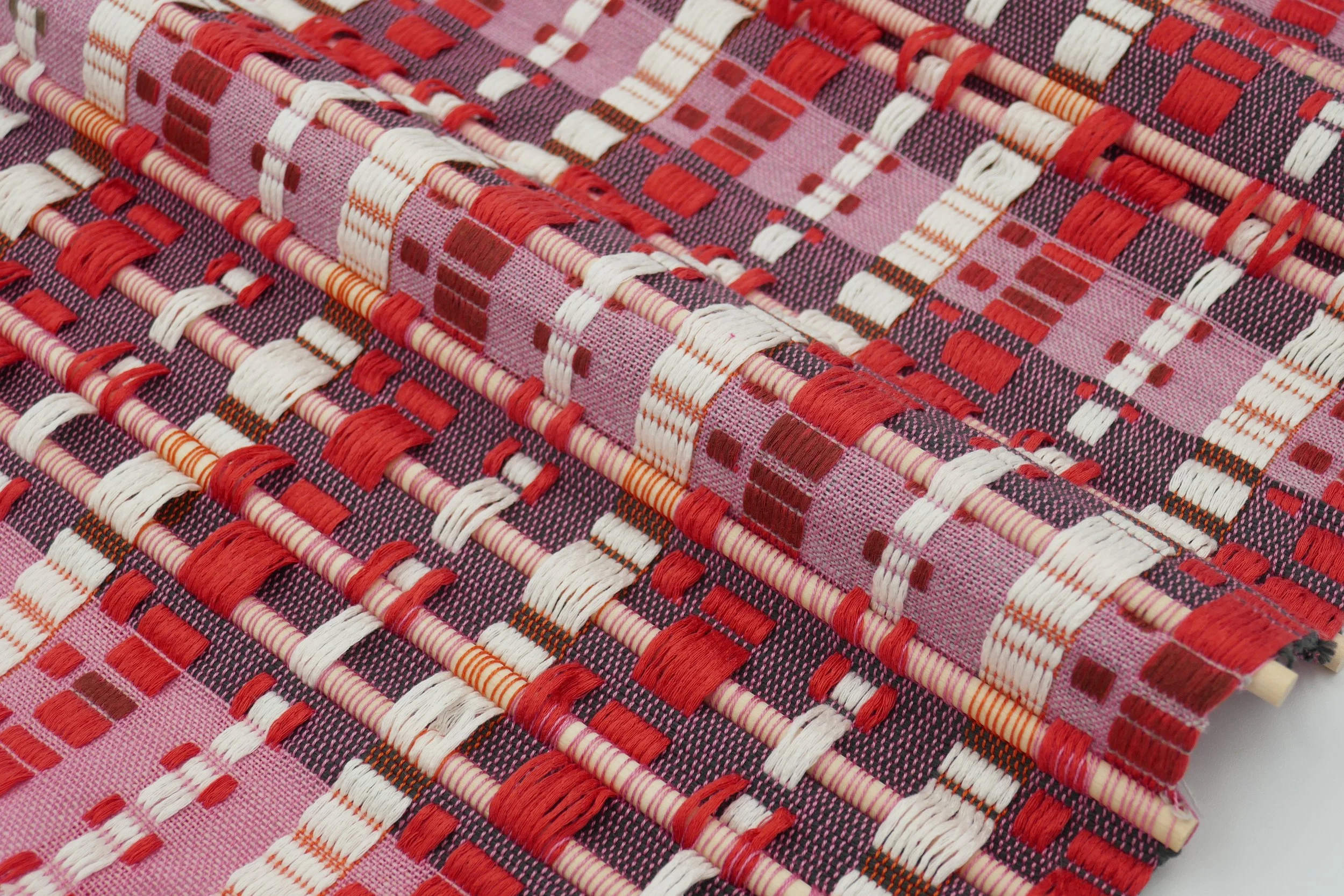
Woven textile, Sarah Kefford, 2026
Thank you from the GSA Textile Design Team!